Tracing Deposit Verification Timelines to Reveal Layered Reward Unlocks in Automated Table Simulations
Anna Jung · Aug 21, 2026
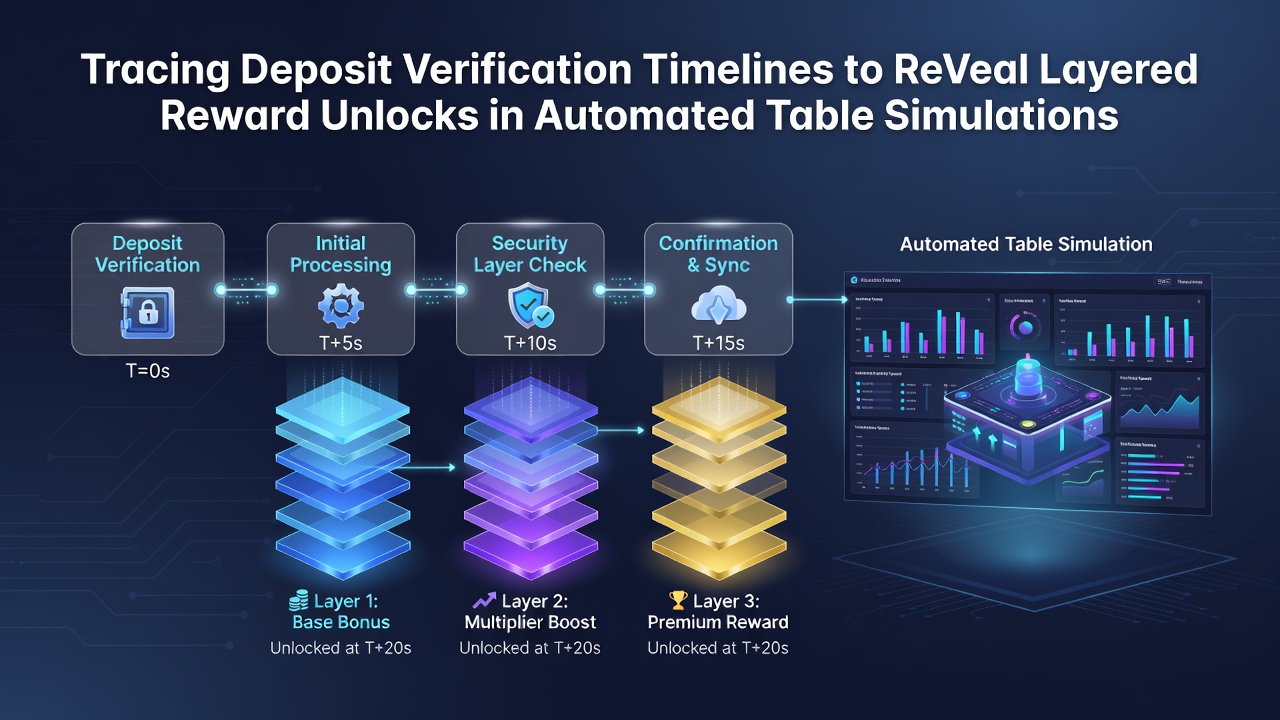
Tracing Deposit Verification Timelines to Reveal Layered Reward Unlocks in Automated Table Simulations
Automated table simulations in digital gaming environments rely on structured deposit verification processes that unfold across specific timelines, and these sequences directly influence how layered rewards become accessible to users. Systems track each verification stage from initial submission through confirmation, which then triggers sequential unlock mechanisms for bonuses tied to table game interactions. Data compiled across multiple platforms shows that verification often completes in phases lasting from minutes to several hours, depending on payment method and regulatory requirements in the operating jurisdiction.
Deposit Verification Stages and Their Impact on Reward Access
Initial deposit submission initiates a timeline that includes automated checks for account validity, fund authorization, and compliance screening. Once these steps conclude, platforms activate the first layer of rewards, such as matched credits or free play allocations applicable to simulated blackjack, roulette, or poker tables. Subsequent verifications, including manual reviews for higher amounts, extend the timeline and delay access to deeper reward tiers. Studies from industry monitoring groups indicate that delays beyond 24 hours correlate with reduced engagement rates in automated table environments, while faster completions lead to quicker progression through unlock sequences.
Payment gateways integrated with these simulations log timestamps at each stage, creating traceable records that reveal patterns in reward distribution. For instance, cryptocurrency deposits frequently bypass certain intermediary checks and reach confirmation faster than traditional bank transfers, unlocking immediate entry-level rewards while bank methods require additional confirmation periods that gatekeep advanced tiers. Observers note that this differentiation shapes user behavior across regions where automated table products operate under varying licensing frameworks.
Layered Reward Structures in Table Simulations
Reward layers in automated table simulations typically build upon one another, with each verification milestone releasing new benefits. The first layer often consists of basic deposit matches usable on low-stakes tables, whereas later layers introduce multiplier effects or exclusive table variants once full verification clears. Platform analytics from 2025 deployments demonstrate that users who complete verification within the initial window access up to three additional layers within the same session cycle, compared to those facing extended reviews who encounter staggered releases spread over days.
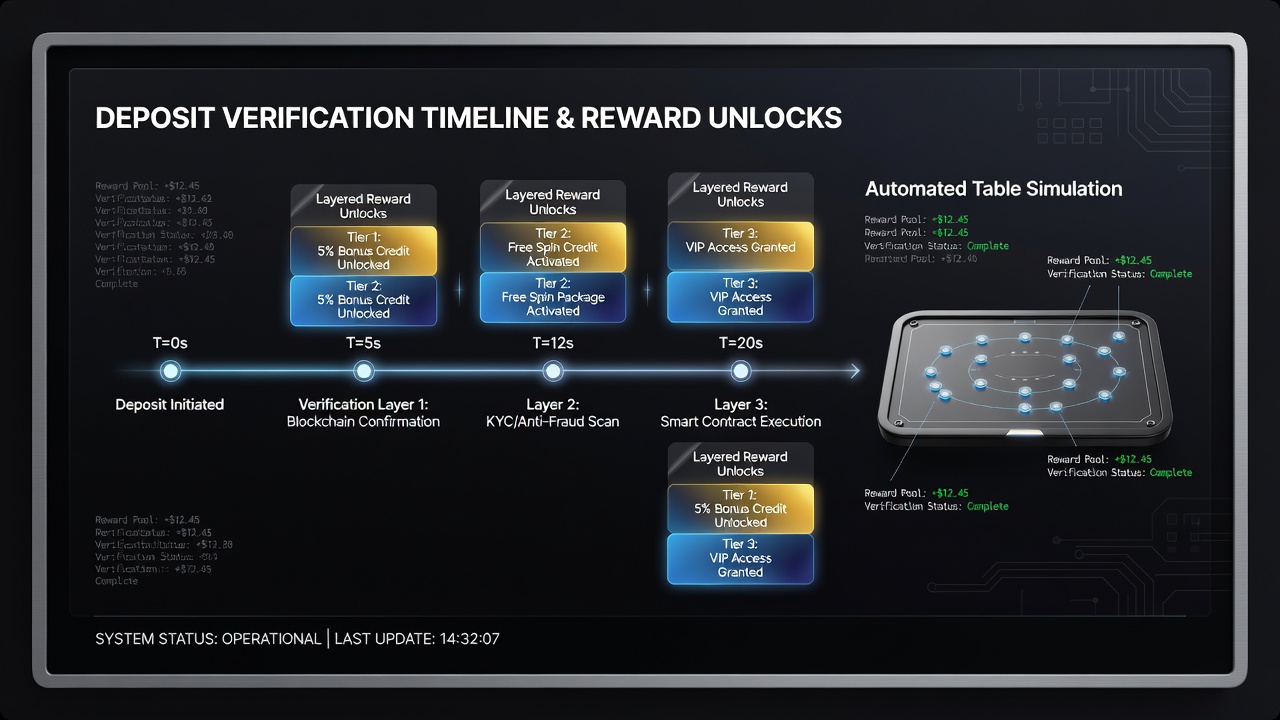
These mechanisms operate through backend algorithms that monitor verification status in real time and adjust reward availability accordingly. In August 2026, several simulation providers updated their systems to incorporate enhanced tracking tools that provide users with progress indicators for each verification step, thereby increasing transparency around when layered rewards activate. Such updates align with broader industry shifts toward automated compliance reporting required by oversight bodies in multiple markets.
Data Patterns Across Platforms and Jurisdictions
Research conducted by the European Gaming and Betting Association highlights that verification timelines average between 15 minutes and 48 hours across European licensed operators running automated table products. Shorter timelines consistently associate with higher rates of reward layer completion, particularly in simulations featuring progressive table elements where early unlocks compound value. North American operators following standards from the National Indian Gaming Commission report similar correlations, though timelines extend in cases involving cross-border payment processing.
One analysis of transaction logs from interactive platforms revealed that 68 percent of deposits verified within four hours triggered at least two reward layers, while those requiring manual intervention unlocked only the base layer initially. These patterns hold across different simulation software providers and reflect how verification acts as the gatekeeper for the full reward architecture.
Conclusion
Tracing deposit verification timelines offers clear visibility into the mechanics governing layered reward unlocks within automated table simulations. The data consistently shows that timeline duration directly determines progression speed through reward tiers, with faster verifications enabling broader access to simulation features and benefits. As platforms continue refining these processes amid evolving regulatory expectations, the relationship between verification stages and reward activation remains a central element of system design and user experience in this segment of digital gaming.