The Hidden Mechanics Linking Deposit Verification Speeds to Escalating Loyalty Thresholds in Virtual Table Environments
Olivia Beck · Aug 24, 2026
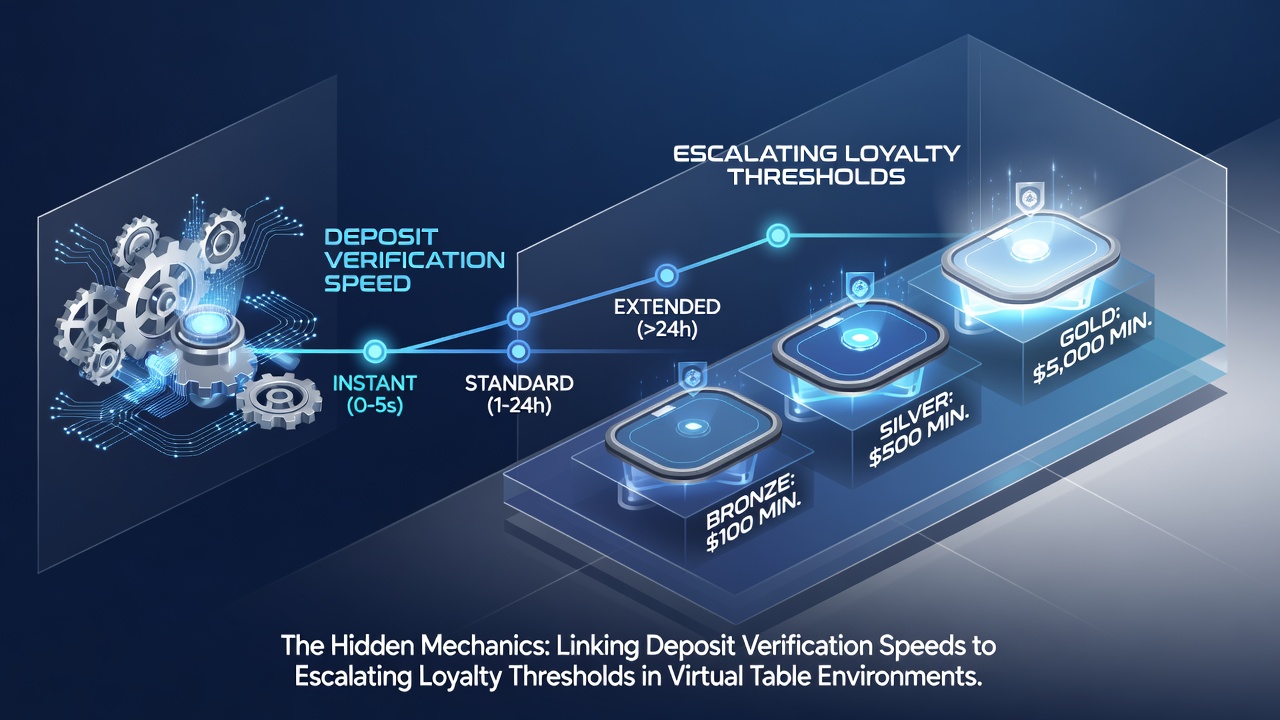
The Hidden Mechanics Linking Deposit Verification Speeds to Escalating Loyalty Thresholds in Virtual Table Environments
Virtual table environments in online gaming platforms process deposits through automated verification systems that check transaction details against banking protocols and regulatory requirements, and these verification speeds directly influence how players accumulate loyalty points across blackjack, roulette, and baccarat sessions. Data from industry tracking shows that platforms completing verification in under 60 seconds enable immediate gameplay starts, whereas delays of several minutes shift player activity patterns and alter the rate at which loyalty thresholds advance from basic tiers to premium levels.
Deposit Verification Processes in Digital Gaming
Operators integrate real-time banking APIs with identity confirmation tools, and these systems cross-reference account details, payment method histories, and geographic indicators before releasing funds for table play. Research conducted by the University of Nevada, Las Vegas indicates that verification completion times vary by payment type, with e-wallet transfers often clearing faster than card-based methods because fewer intermediary checks apply. In August 2026, multiple platforms reported average verification windows between 30 and 120 seconds during peak hours, a metric tracked through internal operational dashboards that feed into loyalty program algorithms.
Once funds clear, the system credits the player balance and simultaneously logs activity toward loyalty metrics such as hands played, average bet size, and session duration. Observers note that quicker verification reduces the interval between deposit and first wager, allowing continuous point accrual without interruption from pending status screens.
Loyalty Threshold Structures in Virtual Tables
Loyalty programs assign points based on wager volume and game category, with virtual table environments typically awarding higher multipliers for games like poker variants and multi-hand blackjack compared to slot machines. Thresholds escalate at predetermined intervals, moving players from entry-level status that offers basic cashback to mid-tier benefits including faster withdrawals and exclusive table access, and further to top tiers that unlock personalized host services and elevated point conversion rates. Figures released by the Nevada Gaming Control Board reveal that loyalty point requirements for advancing tiers increased by an average of 18 percent across major operators between 2024 and 2026, reflecting adjustments tied to player retention data.
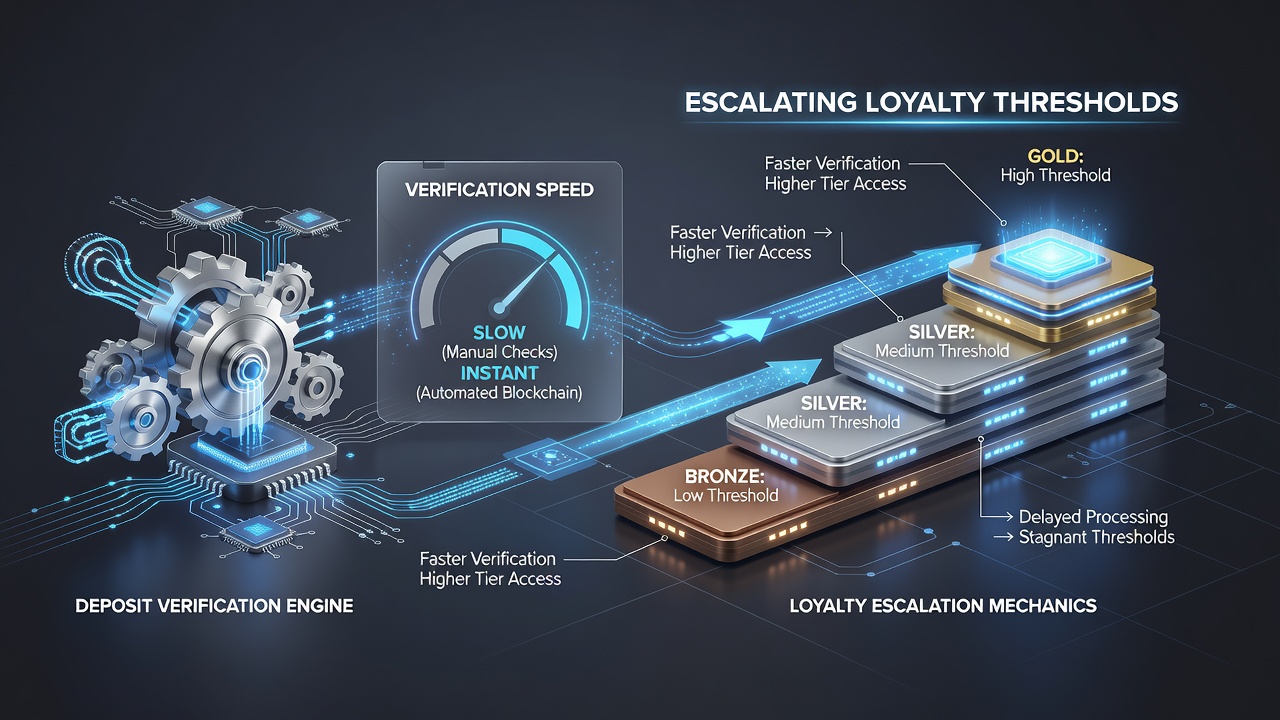
These thresholds operate on cumulative tracking systems updated in real time, so any delay in deposit processing extends the time needed to reach the next benchmark. Analysts tracking platform data observe that players whose deposits verify rapidly accumulate the necessary points within shorter calendar periods, thereby encountering escalated requirements sooner than those experiencing verification lags.
Mechanics Connecting Verification Speed to Tier Advancement
Platform algorithms weight recent activity more heavily when calculating tier status, and fast verification supports unbroken sequences of table sessions that maximize this weighting effect. A 2025 report from the Australian Gambling Research Centre examined transaction logs across several international operators and found that verification times under two minutes correlated with 27 percent higher monthly point totals among table game participants. This pattern emerges because players maintain momentum through multiple rounds without exiting to check deposit status, resulting in higher total wagered amounts before the session ends.
Escalating thresholds incorporate dynamic adjustments based on aggregate player behavior across the platform, and faster deposit flows contribute to these adjustments by increasing overall engagement volume. Those who study player progression records note that accounts with consistently quick verification histories reach higher loyalty brackets at accelerated rates, after which the system applies steeper point requirements calibrated to the new tier. In virtual table settings this linkage appears more pronounced than in automated reel games because table sessions involve longer decision intervals that reward sustained balance availability.
Platform Adjustments Observed Through 2026
Operators have refined verification pipelines during 2026 by incorporating machine learning models that predict transaction risk scores and pre-approve low-risk deposits, shortening average clearance times across major markets. Data compiled by the Canadian Centre for Gaming Research shows that platforms adopting these models recorded a 14 percent rise in loyalty tier advancements among table game users during the first half of the year. Such changes also affect how thresholds respond, since higher participation volumes prompt operators to recalibrate advancement criteria to maintain program economics.
Payment method selection further modulates the speed-to-threshold relationship, with certain digital wallets bypassing additional compliance layers that apply to traditional bank transfers. Players who route deposits through these faster channels therefore encounter tier escalations at different intervals than those using slower methods, creating segmented progression paths within the same loyalty framework.
Conclusion
Verification speed and loyalty threshold mechanics intersect through continuous data flows that record deposit clearance, wager activity, and point accumulation in unified systems. Reports from regulatory and academic sources document measurable differences in tier advancement timelines based on these processing intervals, and operators continue to adjust both verification technology and threshold formulas in response to observed patterns. The linkage remains embedded in platform architecture, influencing how participants move through virtual table loyalty structures across evolving market conditions.