Examining Intersections Between User Feedback Loops and Tiered Incentive Pathways in Portable Amusement Platforms
Anna Jung · Jul 13, 2026

Examining Intersections Between User Feedback Loops and Tiered Incentive Pathways in Portable Amusement Platforms
Portable amusement platforms encompass mobile applications that deliver interactive entertainment experiences across devices, and these systems rely on structured mechanisms to maintain engagement over time. Researchers have documented how user feedback loops collect input from player interactions and channel that data into adjustments for reward structures. Tiered incentive pathways meanwhile organize benefits into progressive levels that users unlock through sustained activity, and the intersections between these elements shape how platforms evolve their offerings.
Core Components of Feedback Mechanisms in Mobile Environments
Feedback loops operate through continuous data streams that capture metrics such as session duration, completion rates, and explicit ratings submitted by users. Developers integrate these signals into algorithms that refine content delivery, and studies from institutions like the University of Melbourne's Digital Games Research Centre have tracked how such loops accelerate iteration cycles in entertainment software. Data released in July 2026 by regional trade groups showed platforms incorporating weekly feedback summaries reduced churn rates by measurable margins compared with static update schedules.
Analysts note that these loops extend beyond simple surveys to include behavioral telemetry that records navigation patterns and pause points within gameplay sequences. When aggregated, the information informs targeted modifications that align incentives more closely with observed preferences, and this process creates a dynamic environment where pathways adjust in response to aggregate trends rather than fixed schedules.
Structure and Implementation of Tiered Incentive Systems
Tiered pathways segment user progression into discrete stages that grant escalating privileges, including access to exclusive content, customization options, or accelerated advancement tools. Industry reports indicate that platforms deploy these systems through point accumulation models where daily logins and milestone achievements contribute to level advancement. The Entertainment Software Association of Canada published findings in early 2026 that outlined how tier visibility influences retention patterns across multiple device categories.
Implementation often involves backend databases that track cumulative activity and trigger automatic upgrades once thresholds are met. Observers have recorded cases where platforms introduced mid-tier bonuses that bridge gaps between levels, thereby smoothing progression curves for participants who engage at moderate frequencies. These structures draw from established loyalty frameworks yet adapt them to the shorter attention cycles typical of portable sessions.
Intersections and Mutual Reinforcement Patterns
Feedback loops intersect with tiered pathways when user responses directly calibrate the criteria required for level advancement or the composition of rewards at each stage. Platforms analyze survey data alongside usage statistics to recalibrate point values or introduce new tiers that address identified drop-off points. One documented example involved a fitness-integrated amusement application that adjusted its intermediate reward tiers after feedback highlighted demand for collaborative challenges rather than solitary milestones.
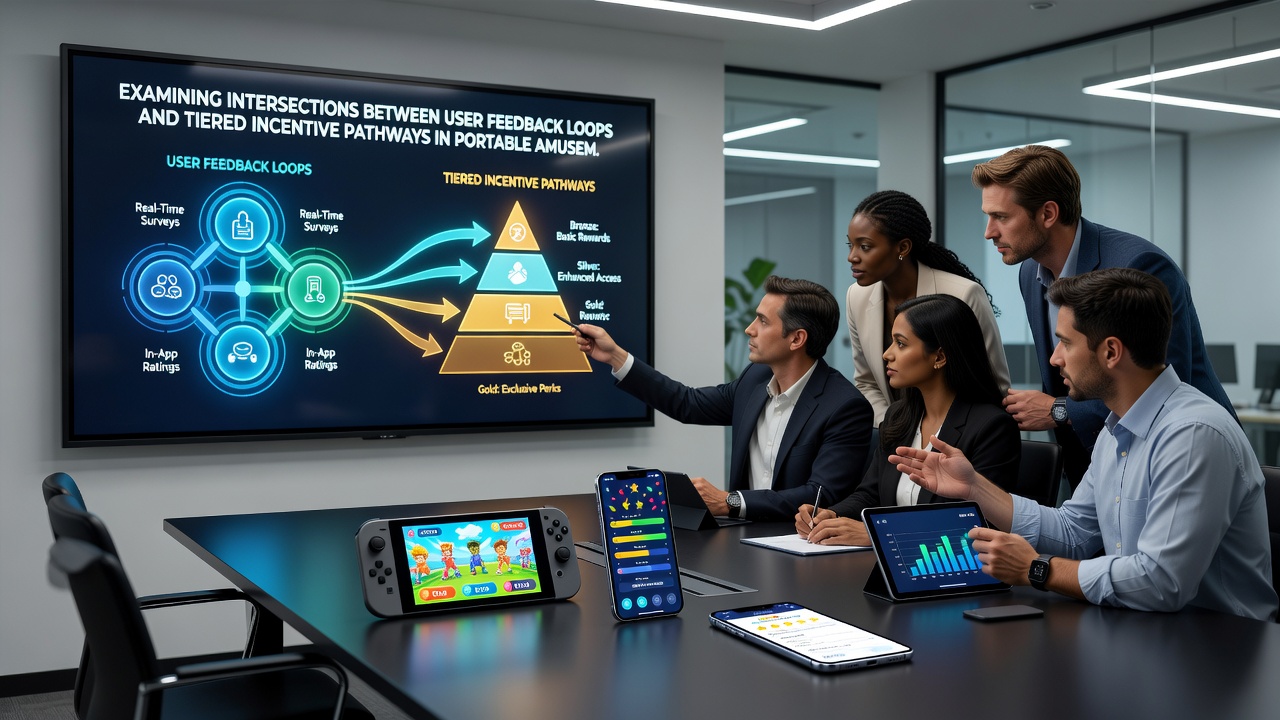
Adjustments frequently occur during quarterly review periods, although some platforms enable near-real-time modifications based on high-volume feedback spikes. Research from academic consortia has shown that when feedback informs tier redesigns, overall participation metrics improve because users perceive the system as responsive to their input. The result is a feedback-reinforced cycle where incentive relevance increases with each iteration.
Regional Trends and Platform Adaptations Observed Through Mid-2026
European mobile entertainment providers began emphasizing cross-device synchronization of tier progress in response to user requests for seamless transitions between tablets and smartphones. Australian Interactive Games Association data from June 2026 indicated rising adoption of hybrid tiers that blend individual achievements with community-wide goals, a shift attributed to aggregated feedback highlighting social motivations. North American platforms meanwhile focused on integrating accessibility features into higher tiers following targeted input from diverse user demographics.
These adaptations demonstrate how localized feedback influences pathway design without altering core architectural principles. Platforms that maintain transparent communication about how feedback shapes upcoming tiers report higher submission rates for voluntary surveys, creating denser data pools for subsequent refinements.
Conclusion
Portable amusement platforms continue to refine the connections between feedback collection and incentive structuring as usage patterns shift across global markets. Evidence from multiple regulatory and research bodies confirms that integrated approaches yield measurable improvements in engagement duration and user retention. Continued monitoring of these intersections will determine how future iterations balance responsiveness with system stability.